Bilan de la 1ère édition de Neshama (2025-2026)
Lancée à Paris en avril 2025, la première édition du projet des jeunes ambassadeurs européens de la mémoire de la Shoah, NESHAMA (Network of European Youth for Holocaust Remembrance) s’est achevée à l’été 2026.
Coordonnée par le Mémorial de la Shoah, avec le soutien de la Commission européenne dans le cadre de la stratégie de l’Union européenne pour lutter contre l’antisémitisme et favoriser la vie juive, Neshama repose sur un consortium de huit institutions partenaires :
- Allemagne : Mémorial du camp de concentration de Langenstein-Zwieberge
- Croatie : Mémorial de Jasenovac & Ministère des Sciences, de l’Éducation et de la Jeunesse
- France : Mémorial de la Shoah & Mémorial des martyrs de la Déportation
- Grèce : Musée juif de Grèce & Ministère de l’Éducation et des Affaires religieuses
- Pologne : Musée d’État d’Auschwitz-Birkenau
Près de 250 élèves, professeurs et partenaires ont participé à ce programme exceptionnel, marqué par deux rencontres à Paris en janvier 2026 et à Oswiecim en mars 2026, par des rencontres en ligne avec des historiens comme de grands témoins et par des événements dans chacun des pays concernés.
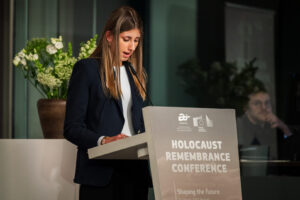
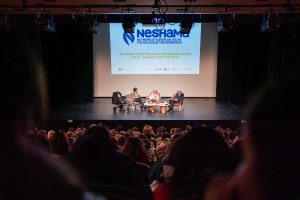
Event D.1.3 – April 29th 2025
1st online joint-training session – introductive history of the Holocaust in Europe – 6 May 2025
2nd online joint-training session – Gender perspective of the Holocaust – 21 November 2025
3rd online joint-training session – Jewish life -11 March 2026
1st online testimonial meeting with a great witness related to the Holocaust – September 26th, 2025
2nd online testimonial meeting with a great witness of the Holocaust – 5 November 2025
3rd online testimonial meeting with a great witness of the Holocaust – 1 December 2025
4th online testimonial meeting with a European personality related to the Holocaust – 6 May 2026
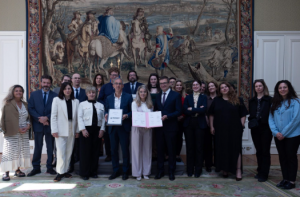
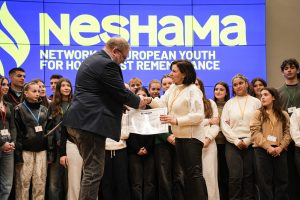
1st Encounter of the first Young European Ambassadors promotion in Paris – 25-28 January 2026
4th online training session – Holocaust remembrance – 15 April 2026
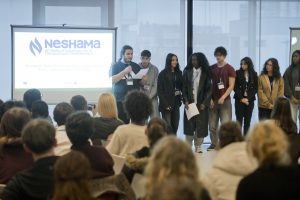
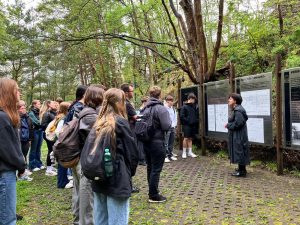
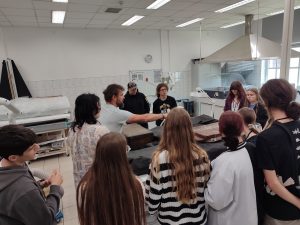
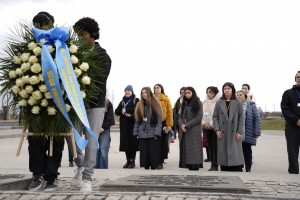
Auschwitz-Birkenau meeting with the first promotion of Neshama Ambassadors. – 15-18 March 2026
Online closing ceremony – May 12th, 2026
Au-delà de l’acquisition de nouvelles connaissances sur la Shoah et sur la vie juive en Europe, les jeunes ambassadeurs du projet Neshama se sont engagés concrètement au service de l’histoire, de la mémoire et de la transmission dans une perspective à la fois locale, nationale et européenne. Ils poursuivront ce parcours citoyen en lien avec les institutions partenaires.

Disclaimer: “Funded by the European Union. Views and opinions expressed are however those of the author(s) only and do not necessarily reflect those of the European Union or the European Education and Culture Executive Agency (EACEA). Neither the European Union nor the granting authority can be held responsible for them