20 August 1941: Roundup of Paris
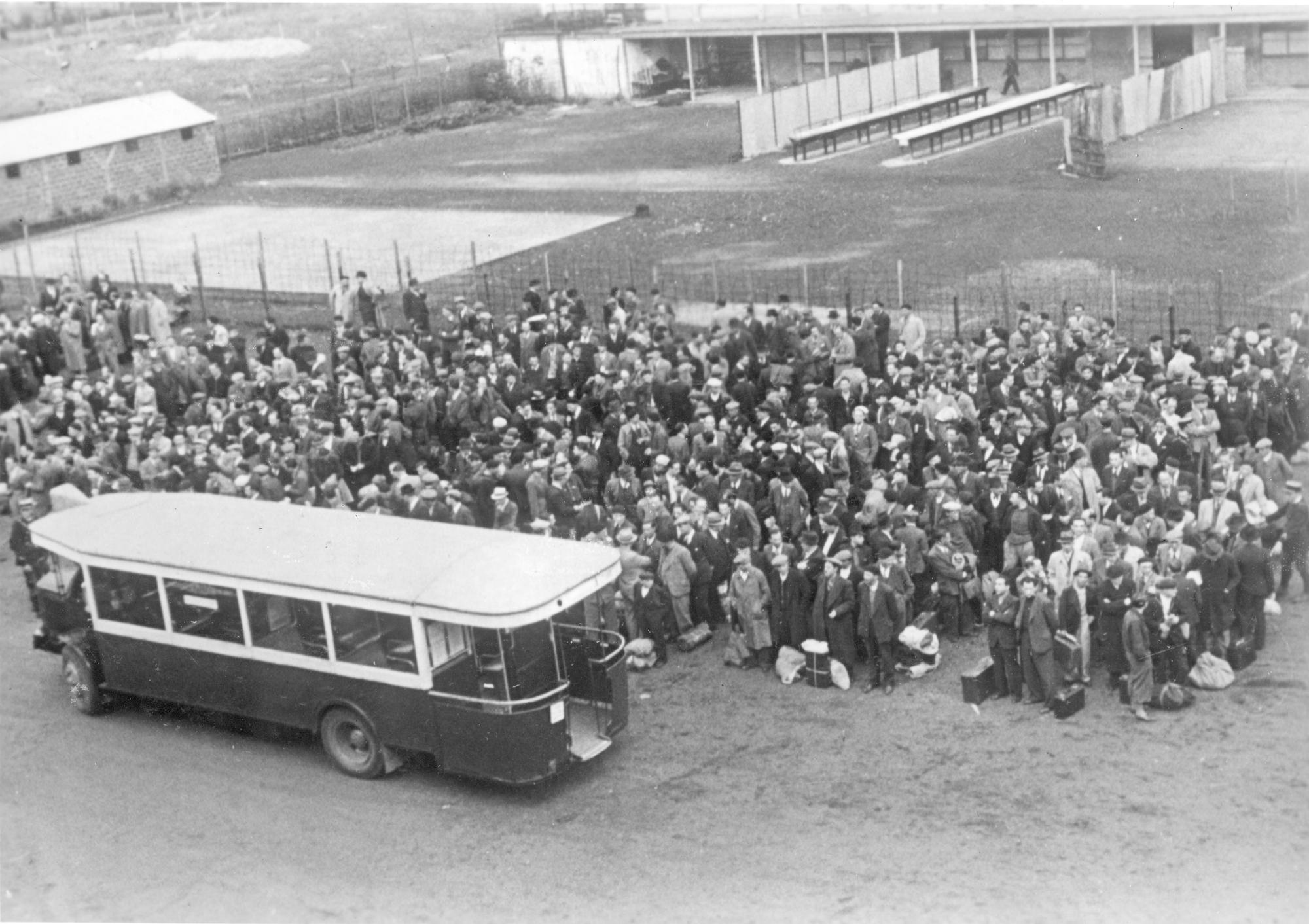
Photo: The arrival of the first internees in the Drancy camp on 08/20/1941
Credits: Shoah Memorial/coll. Bundesarchiv
After the roundup called "billet vert" conducted on 14 May 1941, which caused the internment of more than 3,700 Jews in the camps of Loiret, a second operation occurred on 20 August 1941. At the instigation of the Jewish affairs department of the Gestapo (Sipo SD), the Parisian municipal police, controlled by the German soldiers, arrested 4,232 Jews of various nationalities, all men between 18 and 50 years old, including about 1,500 French citizens. 40 lawyers of the Paris bar are also among the Jews expressly targeted by this first major raid.
This operation is carried out by the Paris municipal police without the French government having been consulted or informed. The arrests take place on public roads and in homes, first in the 11th arrondissement, which is closed off at 5:30 a.m. by 2,400 police officers and police inspectors. Then they are extended until August 25 and extended to the other Parisian arrondissements.
The pretext invoked by the Nazis to justify this roundup is to fight against the actions carried out by the communists following the invasion of the Soviet Union by Nazi Germany on 22 June 1941, communist called "Bolshevik Judeo" by Nazi propaganda.
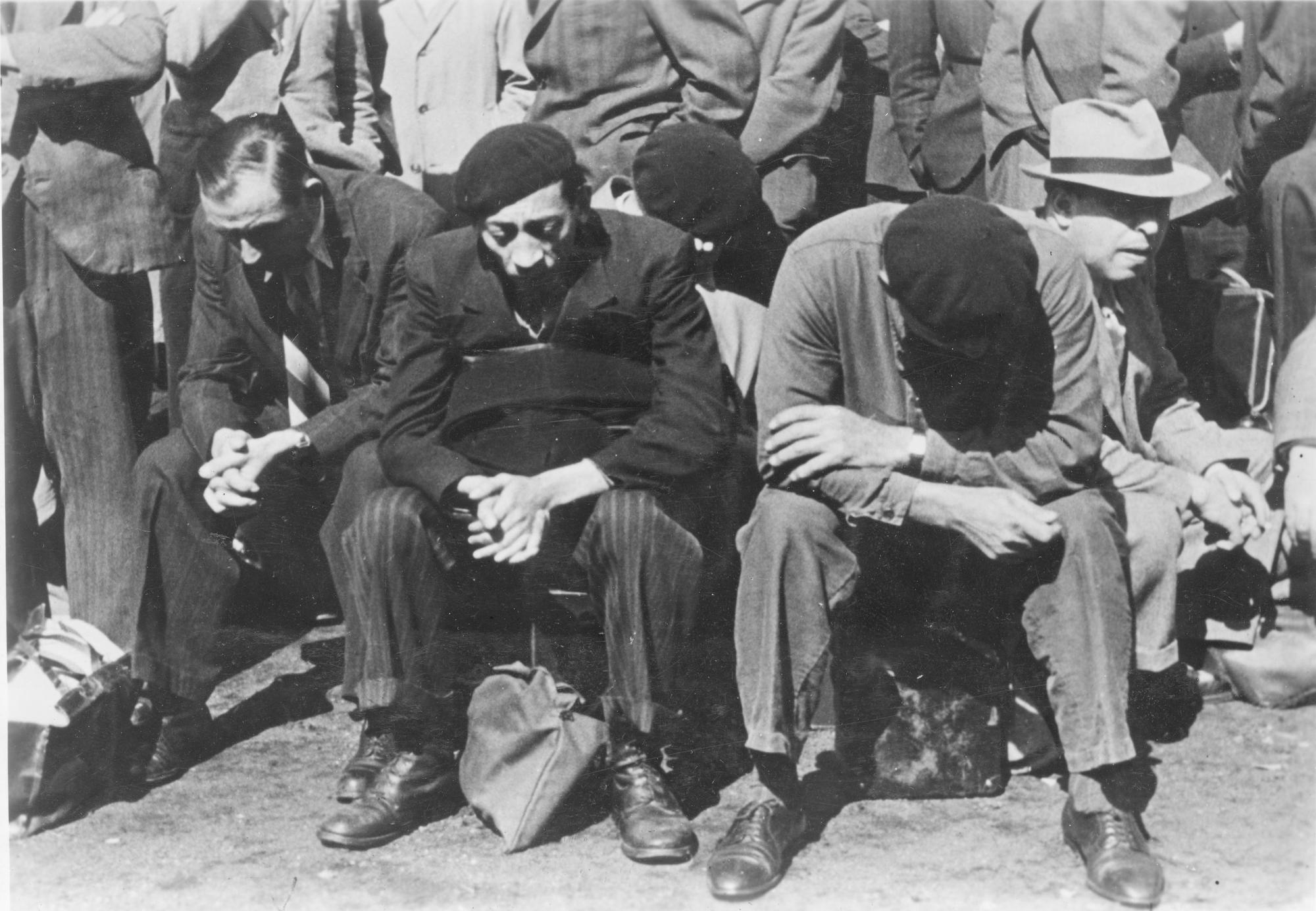
Photo: The arrival of the first internees in the Drancy camp on 08/20/1941
Credits: Shoah Memorial/coll. Bundesarchiv
Those who are arrested at home have the right to take a blanket of clothes and food for one day. They are gathered at various assembly points such as the Japy gymnasium in the 11th arrondissement, then transported to the Drancy camp by the TCRP. The first internees arrived at 7:30 in the morning at the Drancy camp, which opened in a rush. Between 70,000 and 80,000 Jews were interned at the Drancy camp from 1941 to 1944. From 1942, the Drancy camp became a transit and deportation camp for 63,000 internees who were mainly deported and murdered in the Auschwitz camp. Placed under the authority of a Nazi commander, the camp is under the responsibility of the Prefect of Paris who has under his orders the gendarmerie for the guard of the camp and the supply services of the prefecture of the Seine.