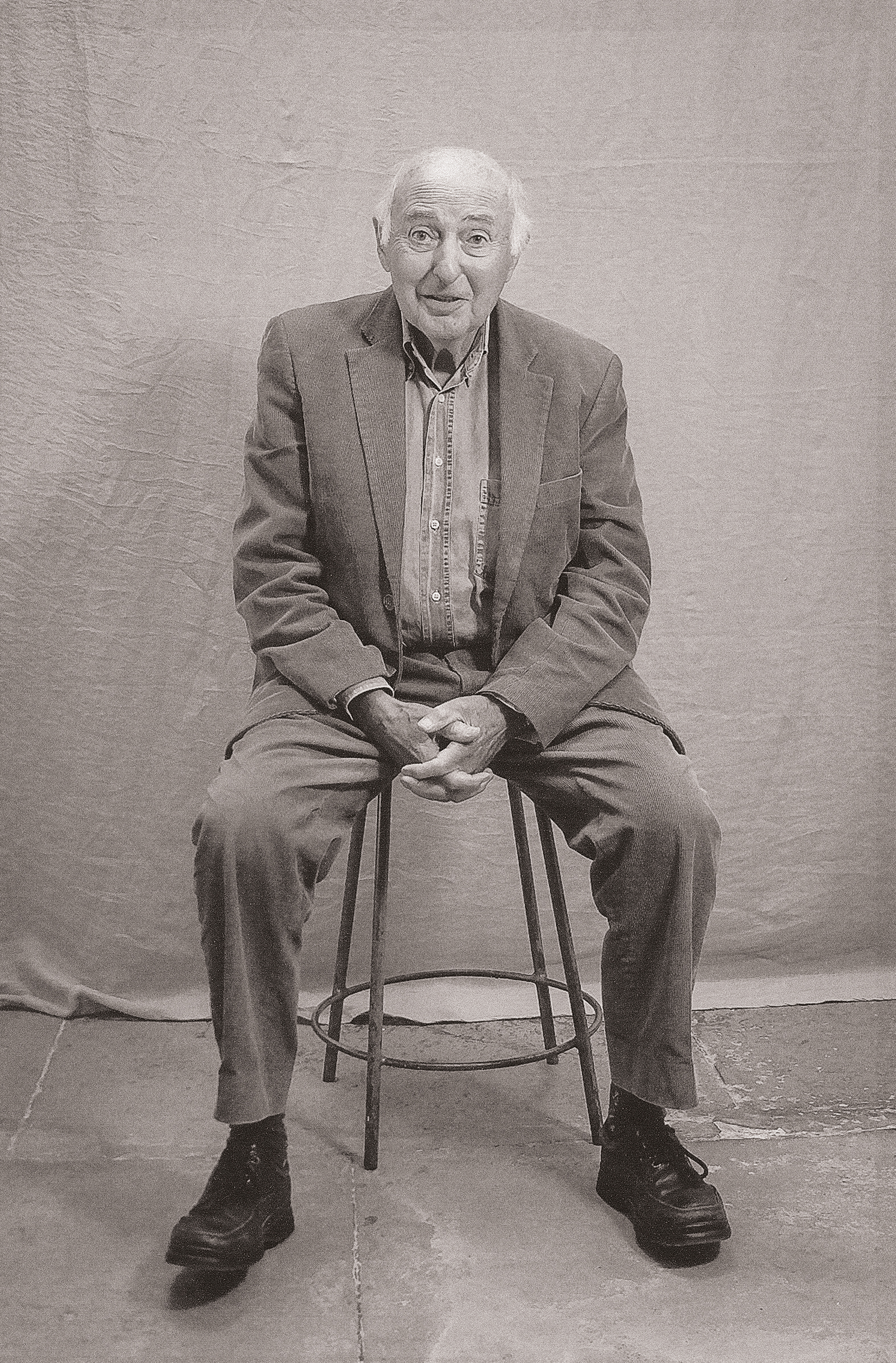
Tribute to Elie Buzyn, survivor of the Shoah, who died on 23 May 2022 at the age of 93.
 Elie Buzyn, a great witness of the Shoah, died on Monday, May 23, 2022, in Paris.
Elie Buzyn was born in Lodz, Poland on 7 January 1929. He comes from a wealthy family; his father is the head of a company and his mother works for WIZO. He is the youngest, his brother Avram is 11 years old and his sister Tauba is 5 years old.
Elie is 10 years old at the time of the invasion of Poland in 1939. While the Jews are now forced to join the ghetto, his brother is killed on 7 March 1940 for example. His parents are destroyed. Elie suddenly understands that he has become the breadwinner of his family and he will have only one obsession: to protect his own.
In January 1942, he secretly celebrated his religious majority during which his exhausted mother asked him to do everything to survive and join the two brothers she had in Paris.
While the Nazis in the autumn of 1942 eliminate Jews who could no longer work, Elie manages to avoid deportation to the Chelmno camp for his parents and sister. The family goes into hiding.
Faced with the advance of the troops of the Red Army, the ghetto was liquidated and the population transferred to the Auschwitz-Birkenau camp in August 1944. The family is dislocated during the selection process on arrival. The parents are murdered in the gas chambers. Elie and her sister join the camp. He was 15 years old. He was then transferred to Auschwitz I and assigned to the Babitz agricultural kommando.
On 18 January 1945, he was evacuated to the Buchenwald camp which he reached three days later. Injured, he was sent to the Revier and managed to avoid amputation of his toes. Thanks to the action of the underground resistance, he joined Block 8 of the "big camp" where hundreds of Jewish children were gathered and helped.
After the liberation of the camp on 11 April 1945, about 1,000 Jewish children were taken in by the child relief organization, 426 of whom were taken in by the French government. Among them, Elie who finds after a few weeks his maternal uncle, Dr. Léon Pérel, then his sister repatriated from the camp of Bergen-Belsen.
In October 1947, Elie went to Palestine to participate in the war of independence and the birth of the State of Israel.
He returned to France in 1954 and joined Oran in Algeria as a boarding school supervisor, while passing his baccalaureate. Two years later, he settled permanently in Paris and began studying medicine. He became an orthopedic surgeon.
Retired in 1995, he carried out humanitarian missions in Africa, notably in Mauritania and Cameroon.
He began to bear witness to his experience during the Holocaust from 1998 onwards and would not stop intervening in front of classes all over France, while also being an activist within the Œuvre de secours aux enfants. He ended his interventions by calling on his audience to become "the witnesses of the witnesses."
An accomplished sportsman, he was selected to carry the Olympic flame at the 2006 Winter Olympics in Turin.
Elie Buzyn published in 2018 his autobiographical story: J'avais 15 ans, vivre, survivre, revivre, Alisio, 2018, and Ce que je voudrais transmettre. Letter to the new generations, Alisio, 2019.
Elie Buzyn was made a knight of the Legion of Honor in 2014 and a commander in the Order of Academic Palms in 2017.
The Shoah Memorial salutes the memory of a great witness of the Shoah, a generous and modest man, with luminous humanism, and offers its condolences to his wife Etty and his family.
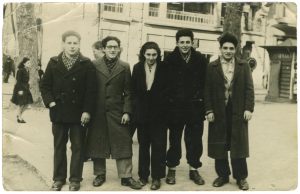
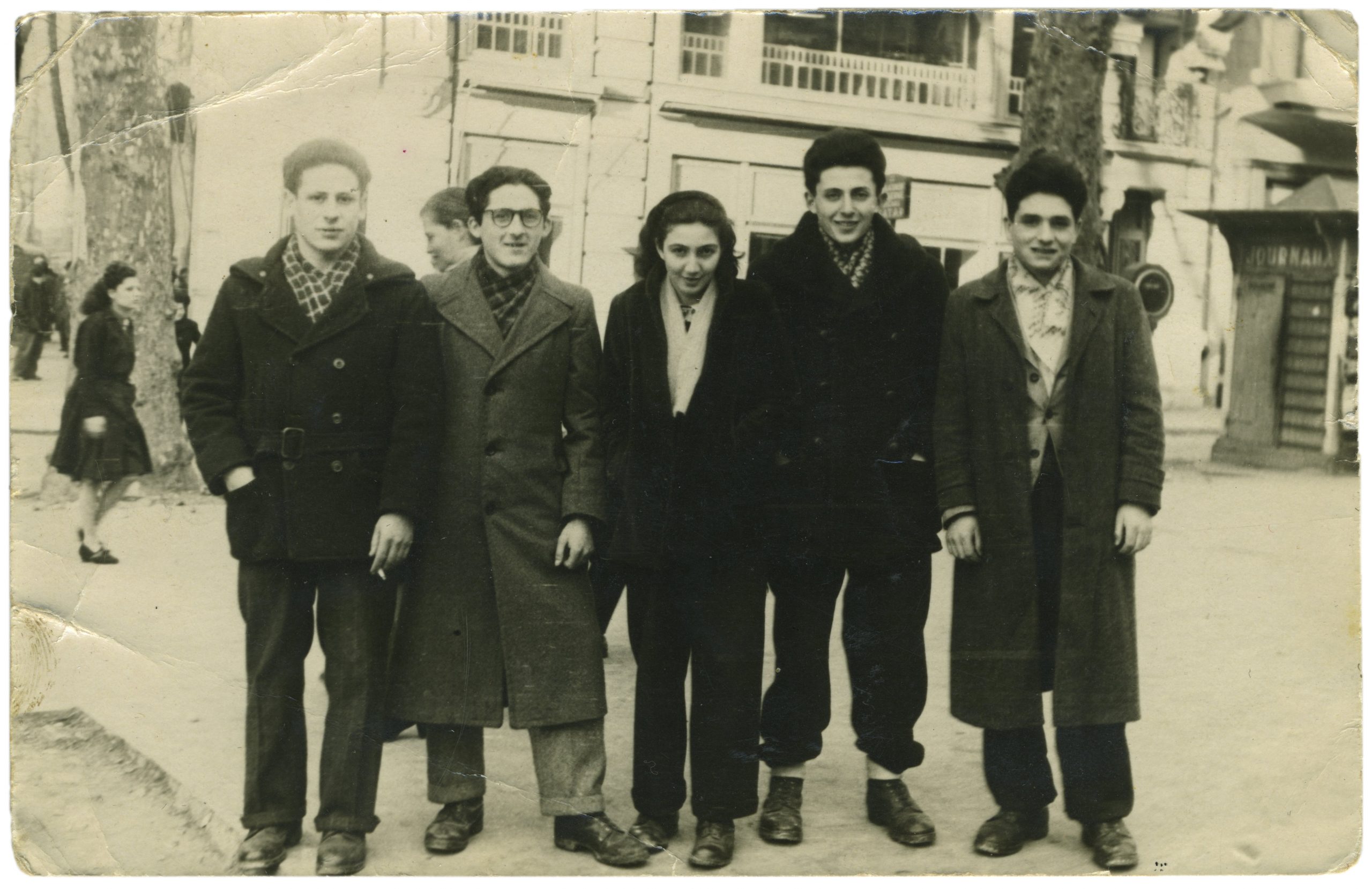
Photo: portrait of Elie Buzyn with other comrades, 1946. 3e left. © Shoah Memorial/coll. Elie Buzyn
Discover the testimony of Elie Buzyn during our campaign "What I want to pass on", 2020
Review the testimony of Elie Buzyn in conversation with Adèle Van Reeth, 2020