Digitization of a fund containing deportees' letters
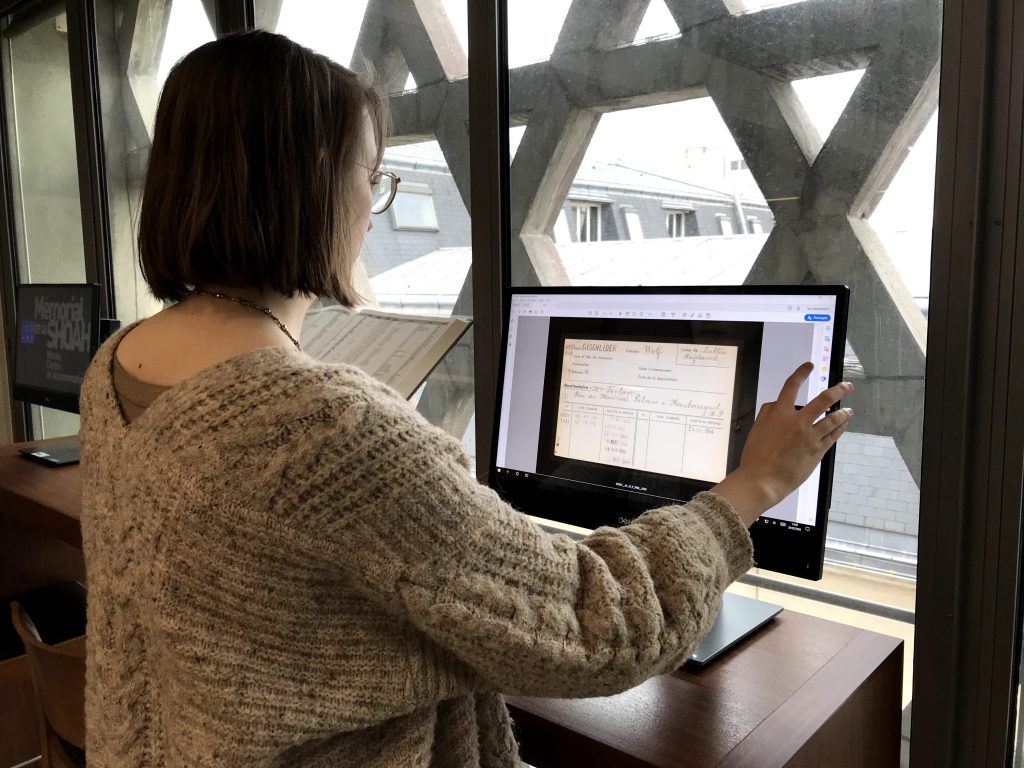
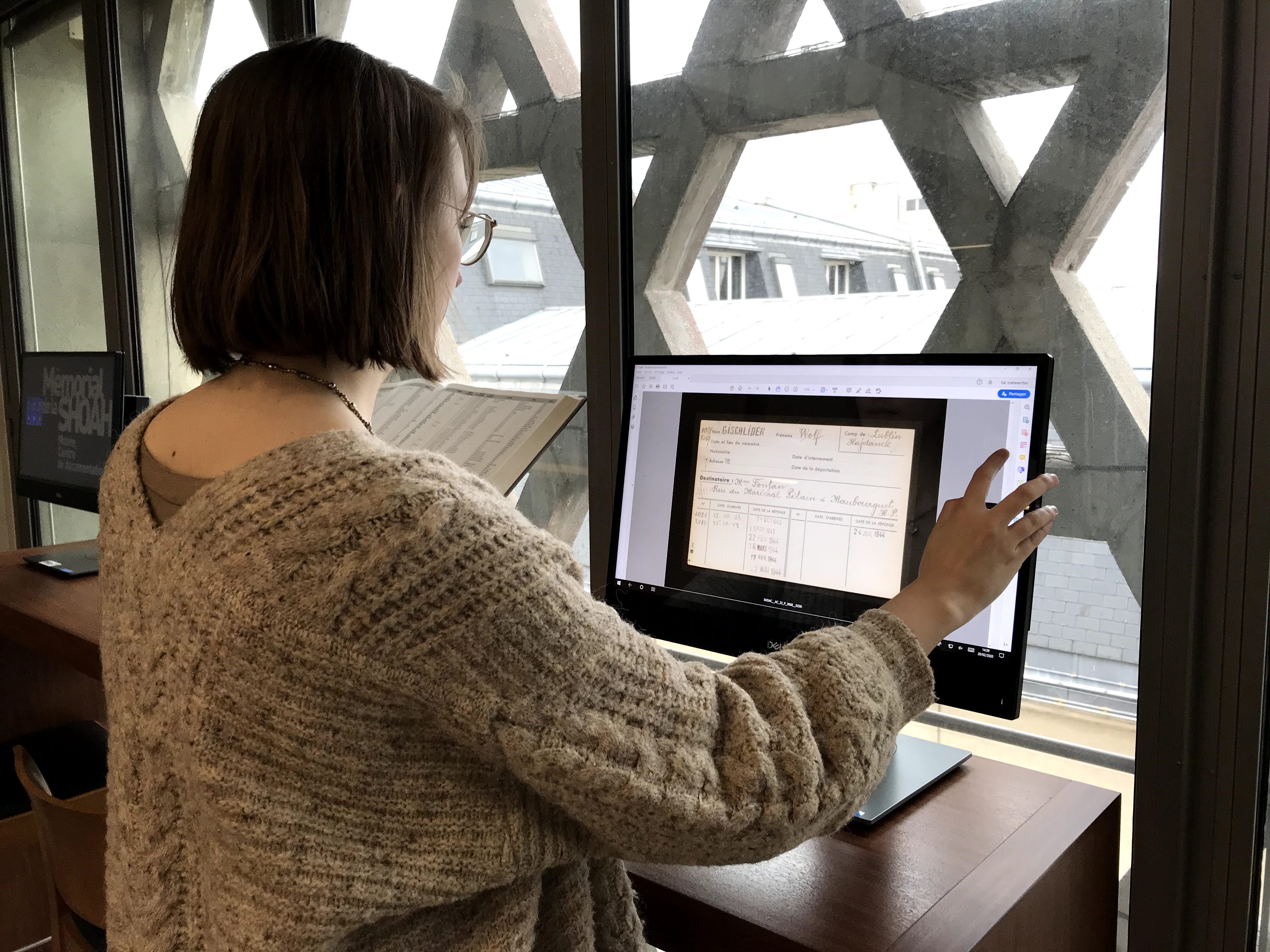
A recently recovered archive containing deportees' letters has just been digitized by the Shoah Memorial and made available in the reading room of the Documentation Centre.
La Division of the Archives of Victims of Contemporary Conflicts (DAVCC) , in Caen, preserves the archives that have made it possible and still make it possible to honor and assert the rights of civilian and military victims of the last two world conflicts. His teams recently identified a set of files from the Union générale des israélites de France (UGIF) during the Second World War.
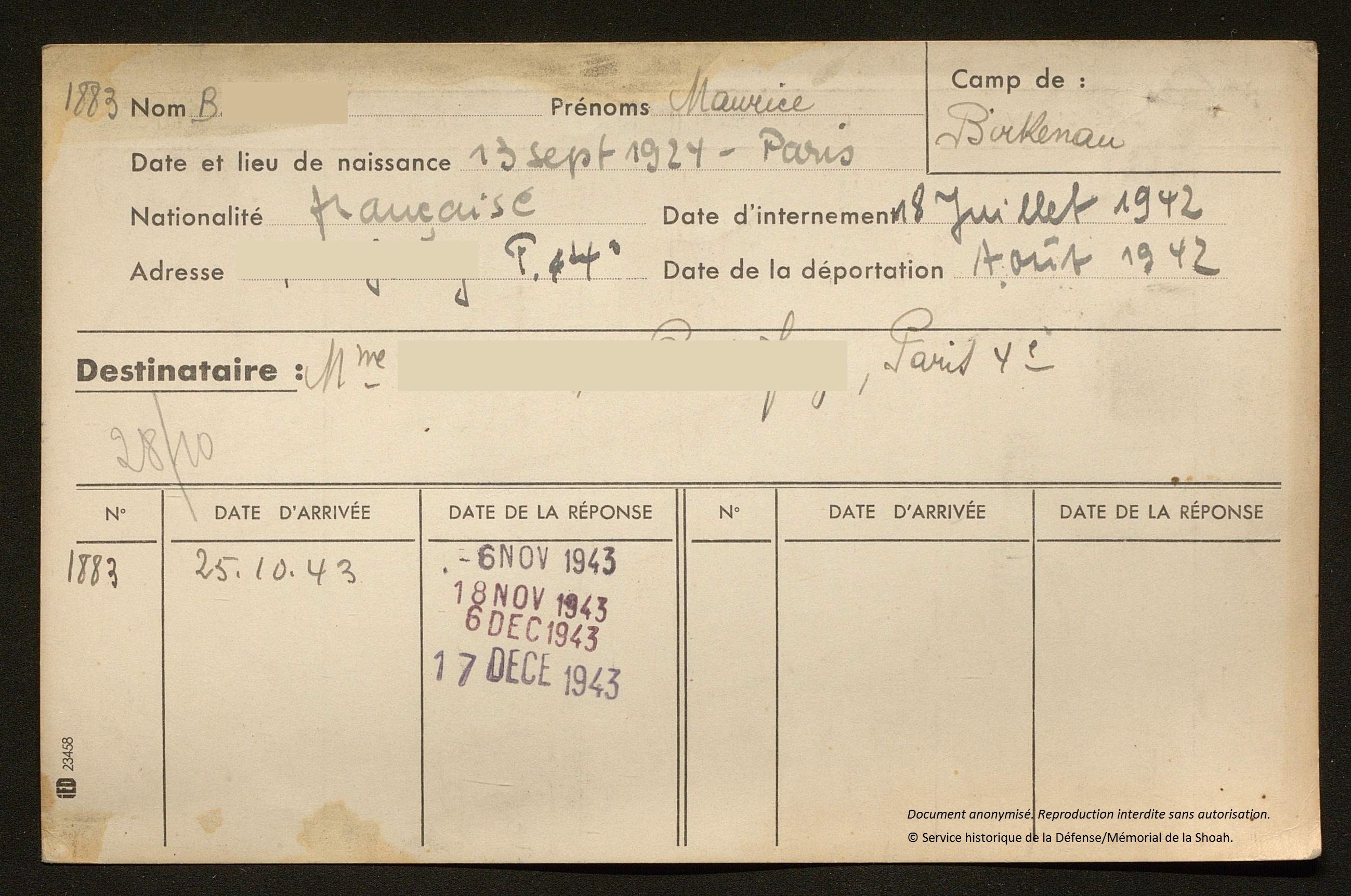
Letters sent by concentration camp inmates were sent to the UGIF, which was responsible for recording them before forwarding them to their recipients. In this fund is the mail tracking file as well as the mails that could not be delivered.
In March 2019, this reconstructed file was made available to the Shoah Memorial for digitization, as part of a partnership agreement with the Defense Historical Service (SHD) in 2016. It can now be viewed on the computer workstations of the SHD reference room in Vincennes, as well as in the reading room of the Shoah Memorial.
The file comes from the Family Correspondence and Search Service (Service 36) of the UGIF, which was located at 4, rue Pigalle in Paris 9.e. Indeed, at the request of the occupation authorities, all Jewish associations had been dissolved and replaced on 29 November 1941 by the UGIF, responsible for representing Jews before the public authorities, and to which all Jews were required to adhere.
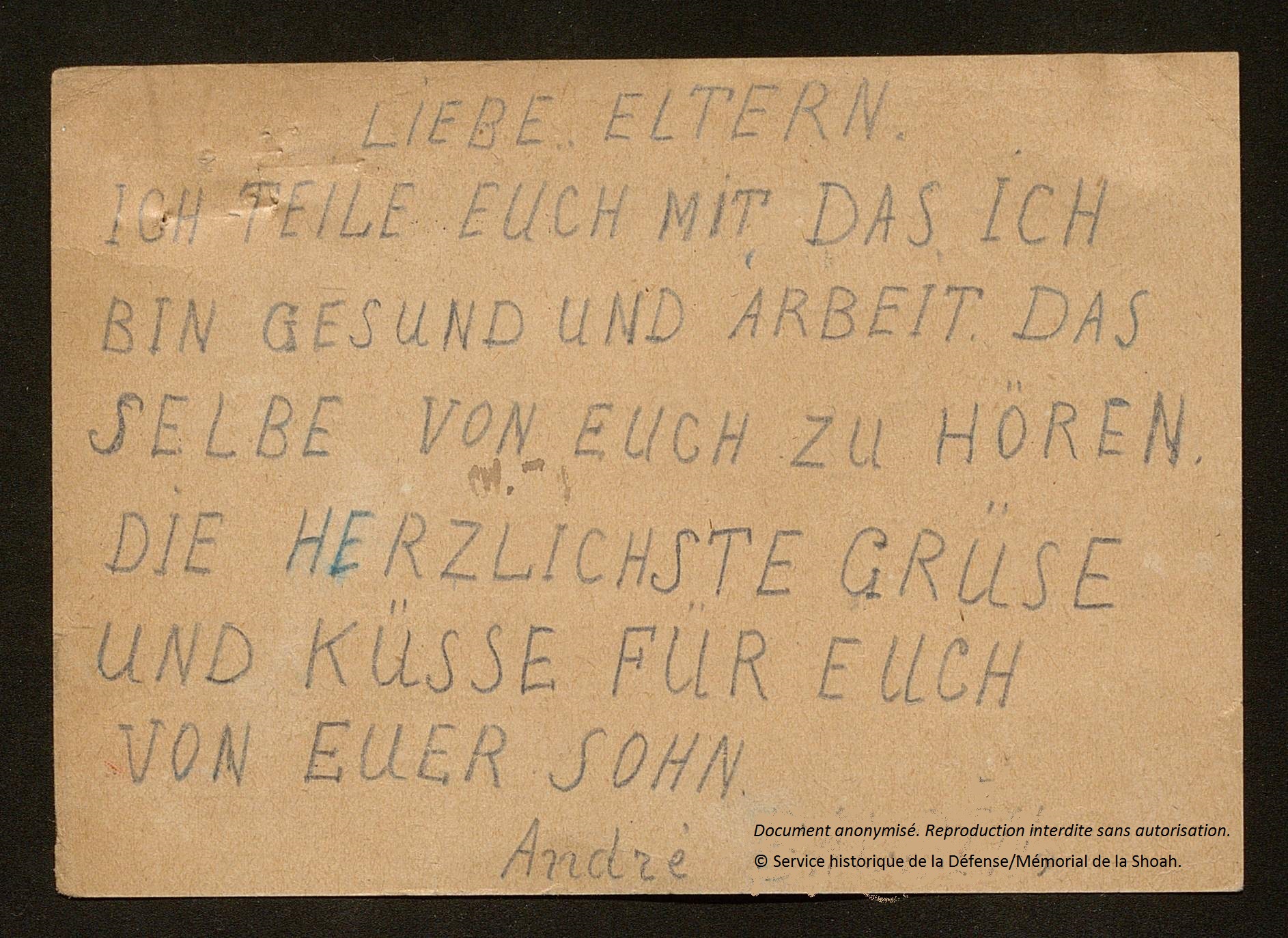
Between 1942 and 1944, this service was required to handle some 4,000 letters sent by the deportees (mainly from Auschwitz and its satellites), and their kommandos. The correspondence was censored and was limited to the mandatory sentences (in German) such as: "I am well," "I am working."
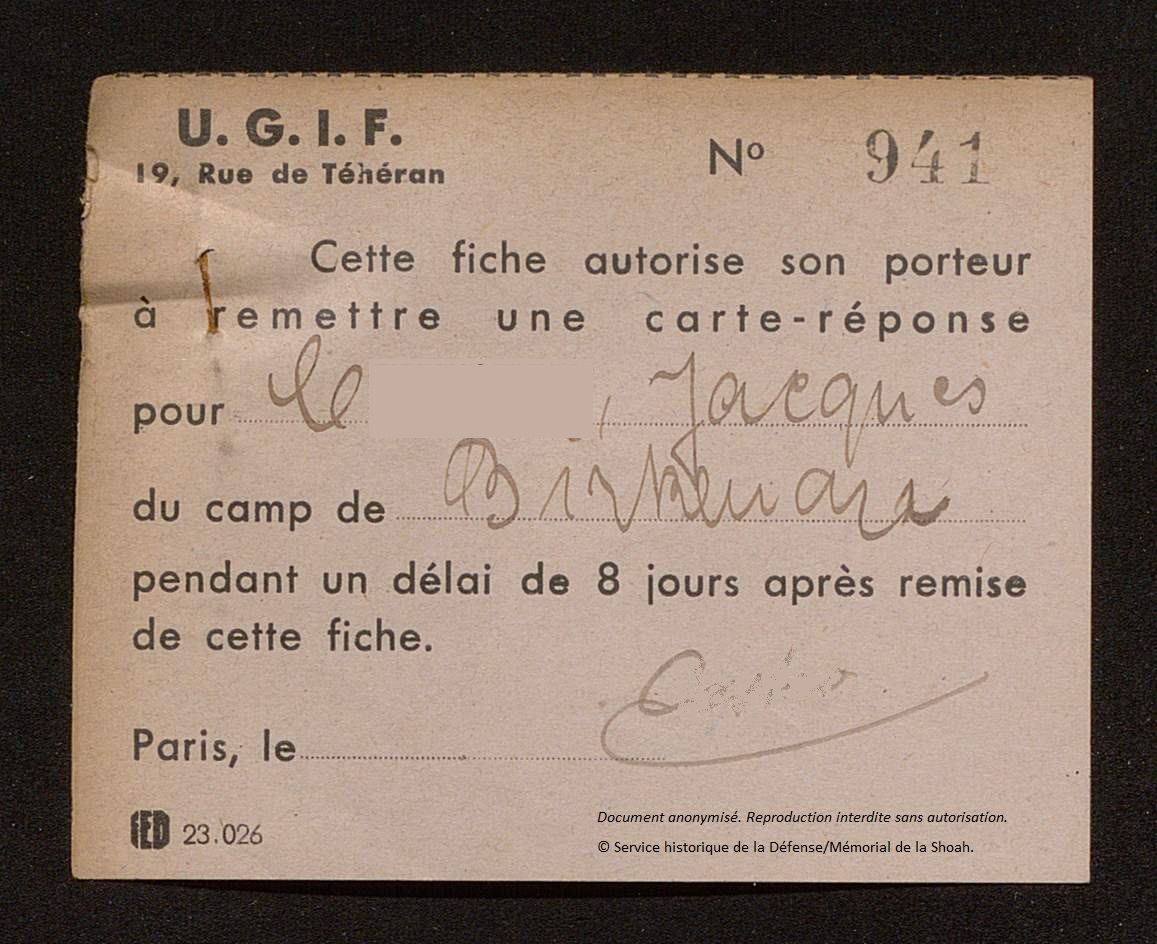
The arrival of a letter was signaled to the recipient by a standard correspondence indicating the instructions to be followed: two letters per month in German including news exclusively of a family nature, to be delivered without an envelope or in a non-enveloped envelope.Sealed at department 36 before the 5th or 20th of each month.
The fund includes 2,910 cards but also 259 undistributed letters. The original file is kept at SHD Caen by the DAVCC under numbers AC 22 P 3065 to AC 22 P 3078.
These sheets include, for the most complete ones, the name, first name, date and place of birth of the deportee, his dates of arrest and deportation, his address in the camp, the dates of the letters arrived and departures, as well as the names and addresses of the recipients. Letters not received by recipients are kept in the fund. Shortly after liberation, these documents were recovered by the Ministry of Prisoners, Deportees and Refugees (MPDR) at the time of the liquidation of the services of the UGIF, in order to shed light on the fate of Jewish families.