Week of education and actions against racism and anti-Semitism
On the occasion of the week and actions against racism and antisemitism, the Shoah Memorial offers you various activities.
#tousuniscontrelehaine
Open air exhibition: the genocides of the twentieth century
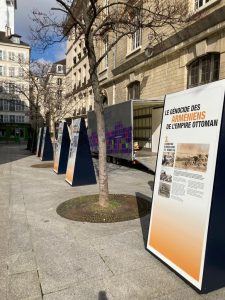
Allée des Justes, near the Shoah Memorial in Paris
from March 22, 2021.
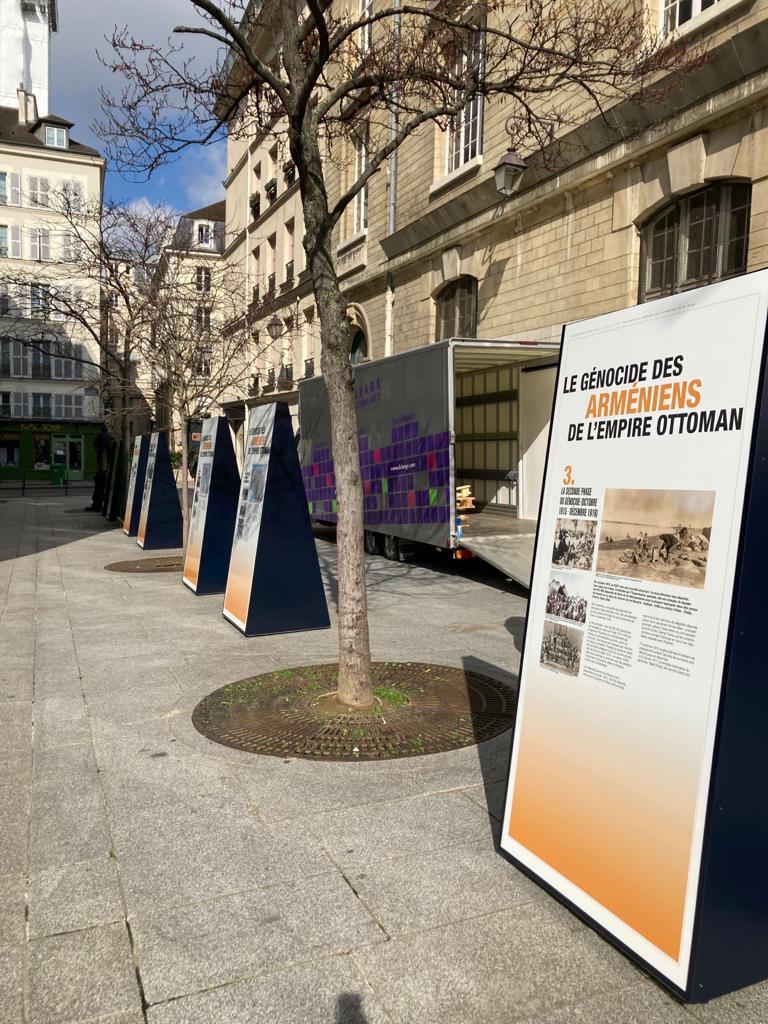
The Memorial adapts to the current context of closure of cultural spaces and occupies the Allée des Justes (Paris 4e) with the exhibition Les Génocides au XXe century, presented to the public and passersby outdoors. These panels, analyzing the clichés of each genocide of the last century, will present a rich selection of photographs, archives, testimonies, made visible to the greatest number, in this pedestrian street, between the public school François Couperin and the Shoah Memorial.
Genocide is a specific offence under international criminal law and a well-individualized concept. The specificity of this offence, as well as the precision of this concept, are highlighted by a comparative approach to three mass murders committed in XXe century, proven beyond a reasonable doubt to be genocides. These are, in chronological order: the destruction of the Armenians of the Ottoman Empire, the Jews of Europe, and the Tutsi of Rwanda. These genocides are comparable. The analysis of their similarities and differences allows us to better understand each person’s mechanisms.
ONLINE CONFERENCES
Sunday, March 21, 2:30 PM
Encounter – A game of mirrors between Islam and Judaism
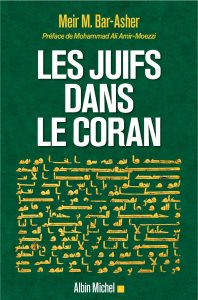 On the occasion of the reissue of The Jews in the Koran by Meier M. Bar-Asher, preface by Mohammad Ali Amir-Moezzi, Albin Michel, 2021.
For nearly two centuries, thinkers and researchers have wondered about the massive presence in the Koran of elements belonging to or derived from Judaism. Breaking down the received ideas of an anti-Semitic Koran and an Islam conveying a "hatred of the Jew", the book analyzes the points of contact and friction between the two religions. An essential perspective to defuse the debate on the complex question of the relationship between the Islamic tradition and the figure of the Jew and Judaism.
In the presence of the author, Hassen Chalghoumi, imam of Drancy, and Mohammed Ali Amir-Moezzi, historian and islamologist, director of studies at EPHE.
Hosted by Julien Darmon, editor at Albin Michel, a specialist in Hebrew and Arabic religious literature.
I want to participate in the conference
Sunday, March 21, 4:30 PM
Jews, Muslims, France: a little-known story
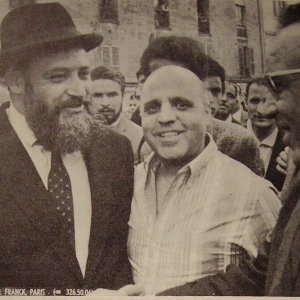 On the occasion of the publication of Jews and Muslims in France. The weight of fraternity by Ethan B. Katz, preface by Benjamin Stora, Belin, 2018. Relations between Jews and Muslims cannot be limited to their conflictual dimension. Ethan B. Katz takes a fresh look at this history by showing that political and cultural fraternities existed first in the colonial space, then on the soil of the metropolis.
The reduction of these categories of French to religious and conflictual identities is recent, while the colonial question has, in the first place, created a progressive gap between the two communities.
I want to participate in the conference
Tuesday 23 March, 7:30 PM
Poland: the story of the Holocaust in the courtroom
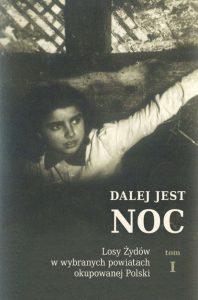 Meeting organized with the Review of the history of the Shoah.
Historians Barbara Engelking and Jan Grabowski are accused of defamation for publishing a book claiming the complicity of a Polish village mayor in the murder of Jews during World War II. What does this trial mean and what does it say about the conditions of Holocaust research in Poland? What are the academic and political implications of this procedure? More broadly, how to make history in a climate of growing authoritarianism in Poland and several Central European countries?
In the presence of Barbara Engelking, Professor, Polish Center for Holocaust Research, Institute of Philosophy and Sociology, Polish Academy of Sciences, Jan Grabowski, Professor of History at the University of Ottawa, and Paul Gradvohl, Professor at Paris 1 Panthéon-Sorbonne, director of the Research Centre on the History of Contemporary Central Europe (CRHECC).
Moderated by Audrey Kichelewski, lecturer in contemporary history at the University of Strasbourg and co-director of La Revue d'histoire de la Shoah.
I want to participate in the conference
Thursday, March 25, 7:30 PM
Conspiracy theories in a pandemic
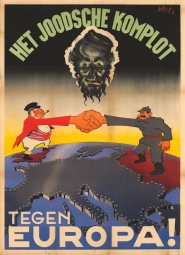 Defined since 1945, conspiracy theories continue to flourish, propagated on a global scale like the diseases born of the globalization of changes. Each new event that occurs, whether it concerns politics, the economy, or health (such as COVID-19), can be the subject of a new conspiracy theory, which it is nevertheless possible to decipher and thus combat.
In the presence of Antoine Bristielle, PhD student at Grenoble Alpes University, member of the Jean-Jaurès Foundation, and Rudy Reichstadt, founder of the Observatory of Conspirationism.
Moderated by Tristan Mendès France, specialist in digital cultures, associate lecturer at the University of Paris 1.
I want to participate in the conference
Sunday, March 28, 4 p.m.
Les Rendez-vous de Drancy: literary with Beata Umubyeyi Mayor
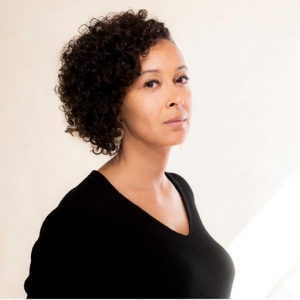 Beata Umubyeyi Mairesse was born in Butare, Rwanda, in 1979. She arrived in France in 1994 after surviving the genocide of the Tutsi. Tous tes enfants dispersés, his first novel, features Blanche, a survivor of the genocide of the Tutsi, who lives in Bordeaux. She built her life in France, with her husband and her mixed-race son Stokely. But after years of exile, when Blanche returns to her mother Immaculata, the painful memory resurfaces. Will the two of them be able to talk, forgive each other, and love each other again? Stokely, caught between two countries, wants to understand where he comes from. Ode to persevering mothers, to transmission, to the life drive that animates each of us, All your dispersed children carry the voices of three generations trying to renew broken ties and find their place in today’s world.
Les Rendez-vous de Drancy are all led by Alix Quéré, coordinator in charge of educational activities at Drancy, Shoah Memorial.
I want to participate in the conference