



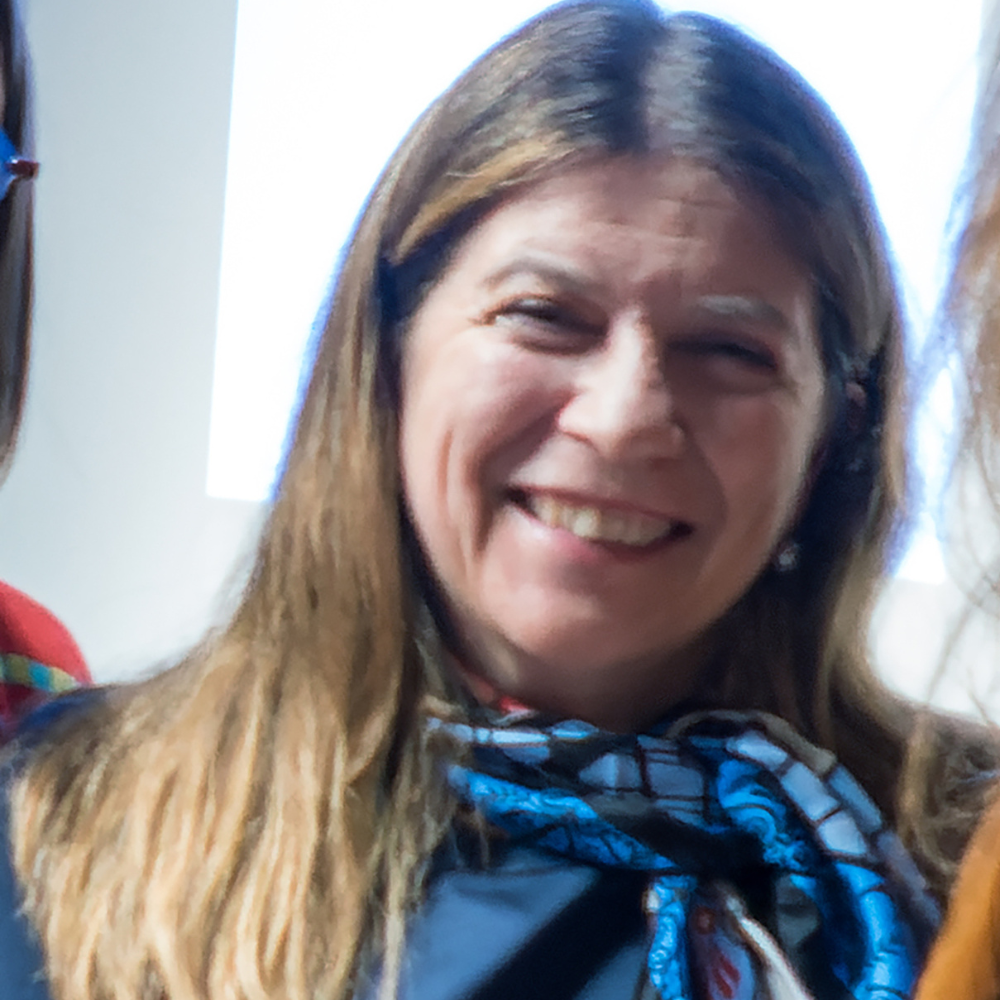
Tribute to Laura Fontana, representative of the Shoah Memorial for Italy. news

The Shoah Memorial has the immense sadness to announce the death of Laura Fontana, head of our institution for Italy.

For more than 20 years, Laura Fontana has dedicated her life to teaching and transmitting the history of the Holocaust.

Author of several articles and research books on the history of the Shoah, expert and speaker in conferences around the world, she led with rigor, determination and dynamism many projects aimed at teaching the history of the Shoah.

It organized in Italy throughout the year a rich program of conferences, training for teachers, as well as numerous exhibitions. Among the most striking projects, she had implemented a university for Italian teachers that was held every two years at the Shoah Memorial in Paris.   As part of the EHRI project, European holocaust research infrastructure, she contributed to the creation of innovative pedagogical and historical tools.

The Memorial is sincerely grateful to him for the work accomplished. Caring, committed, smiling, positive, Laura leaves a great void and we already miss her. The Memorial extends its sincere condolences to his parents, his daughter and all his loved ones.

Review the conference 'The Italians at Auschwitz' (2022)

On the occasion of the day dedicated to Italy in 2022
On the occasion of the publication of Gli Italiani ad Auschwitz (1943-1945). Deportazioni, «Résolz finale», lavoro forzato. A Mosaic of Jews, by Laura Fontana, published by Owiêcim, Auschwitz Birkenau State Museum, 2021.
Between the autumn of 1943 and the end of 1944, several thousand Italians were deported to Auschwitz. About 7,800 were Jews, men, women, and children, rounded up and deported for the sole purpose of being murdered. Moreover, in 1944, as part of the repressive and economic Nazi policy in the Italian provinces annexed to the Reich under the name of the Adriatic Coast, at least 1,200 non-Jewish Italians (90% were women) were arrested and deported to Auschwitz, for the most part as political prisoners. If the destination was the same, the fate of the deportees was not identical.
In the presence of the author.
In conversation with Elisabetta Ruffini, doctor of comparative literature, director of ISREC (Istituto Bergamasco per la Storia della Resistenza e dell'Età Contemporanea). In partnership with the Italian Cultural Institute.